


Deep Dive
Eight Major Trends Outlook for the Grocery Industry in 2024
In 2024, the grocery industry faces multiple transformations: the pending $24.6 billion merger between Kroger and Albertsons, the continued rise of value retail, the maturation of omnichannel strategies, Walmart's momentum, accelerated upgrades to in-store experiences, a shift in e-commerce fulfillment focus toward stores, the growth phase of retail media networks, and artificial intelligence emerging as a new industry engine. This article synthesizes expert perspectives to analyze how these trends will reshape the industry landscape.
When looking at the grocery industry landscape in 2024, the importance of the Kroger-Albertsons merger cannot be underestimated. If the Federal Trade Commission approves this $24.6 billion deal, or if Kroger prevails in federal court against the agency's challenge, the competitive landscape in the U.S. will be reshaped. The merger would create a massive new supermarket player and could very likely trigger a chain reaction affecting everything from the supply chain to merger and acquisition activity in the grocery sector. If the two companies fail to complete the deal, or become embroiled in a prolonged legal dispute with the FTC, the industry picture in 2024 will be vastly different.
But the mega-merger is not the only focus in 2024. In interviews with experts over the past few weeks, we have learned about the various challenges and opportunities facing the grocery industry. Although inflation-driven consumer price sensitivity will continue to test grocers' ability to offer discounts and market affordability, the dual demand for both in-store and digital experiences means the time has never been more ripe for crafting a distinctive omnichannel commerce strategy.
Here are eight trends expected to impact the grocery industry this year.
Value retail is here to stay
Experts agree that inflation will cool in 2024. However, many consumersstill feel uneasy about the economy and their personal finances. Neil Stern, CEO of Good Food Holdings, expects a rapid inflation slowdown in the new year and predicts that private labels will become a "significant component" of grocers' value strategies. As private label sales grow and national CPG brand sales begin to erode, this will prompt them to aggressively defend market share through promotions and incentives, says John Clear, senior director at consulting firm Alvarez & Marsal. Clear expects a "price war" over the next 12 months.
Experts also point out that increasing basket size (units per trip) will be a focus in 2024. In recent years, retailers have been able to offset declining volumes through price increases. But as price hikes slow, Stern expects manufacturers to increase in-store promotions to encourage consumers to buy more products.
"I think many retailers will also think about how to use new technologies to upgrade their ability to measure price elasticity for shelf pricing and promotional pricing, because the payoff from smarter decisions is higher than ever," says Bobby Gibbs, partner in Oliver Wyman's retail and consumer goods practice.
Retailers will adopt more sophisticated omnichannel strategies
For a long time, grocers have treated in-store shopping and e-commerce as separate channels, but they may finally advance omnichannel strategies that merge physical and digital shopping into a unified experience. Over the past year,retail media networks have swept through the grocery industry, and driven by this momentum, grocers are expected to take measures such as building mobile apps that prioritize in-store shopping and using electronic shelf labels to make personalized offers more dynamic, says Tom Furphy, a former Amazon executive and now CEO of Replenium, an automatic replenishment technology company.
Furphy adds that retailers need to take a more ambitious and purposeful approach to their omnichannel operations. This means that grocers that go beyond simply managing pickup and delivery services will be the most likely to connect with digital-first consumers. "The store is the key enabler to winning the future of grocery," says Jordan Berke, former Walmart e-commerce executive and founder and CEO of Tomorrow Retail Consulting. "In-store digital engagement and truly creating the notion that the app is an omnichannel tool rather than just an e-commerce or loyalty app... should be the long-term goal for retailers."
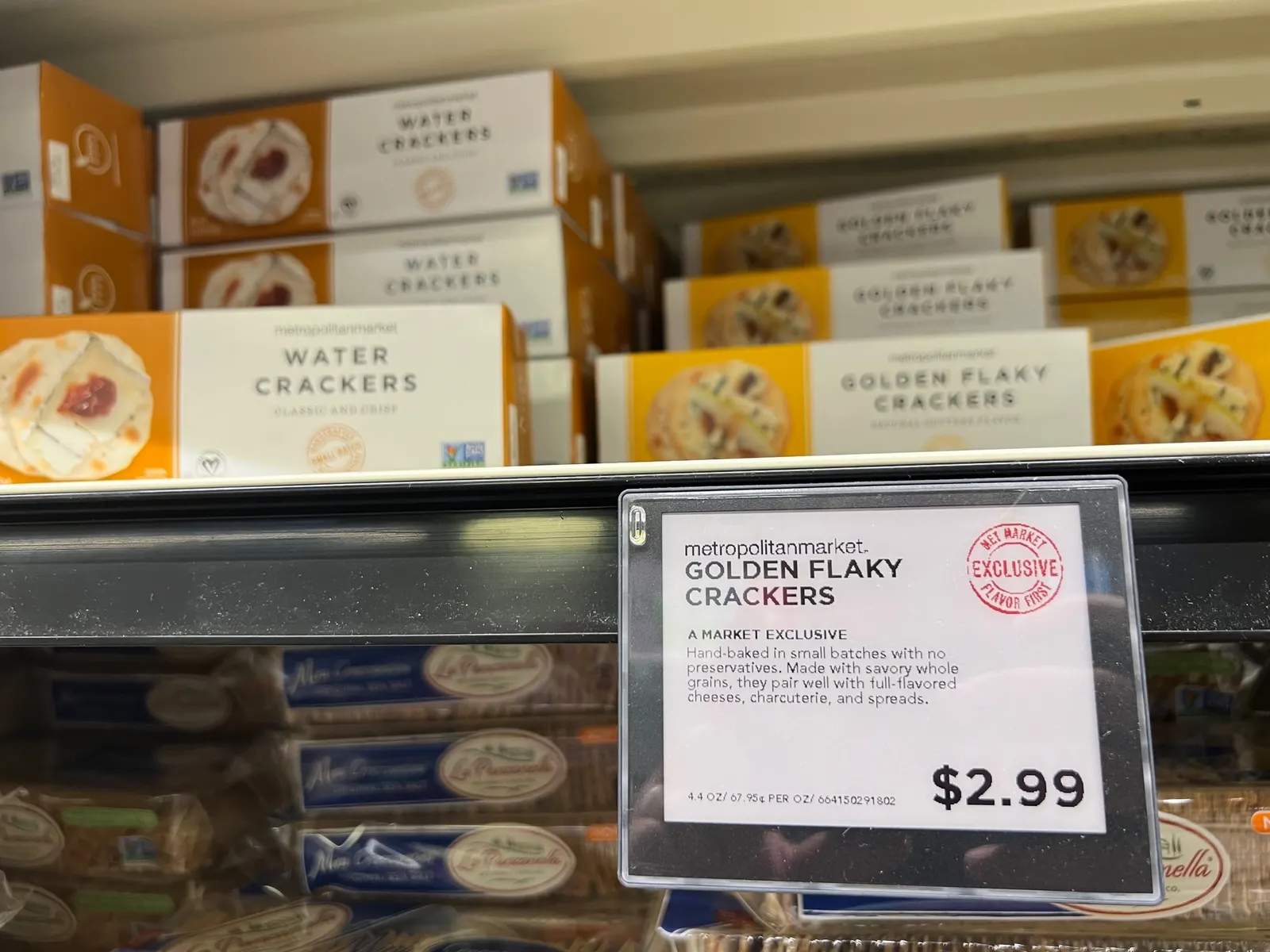
Focus on the Kroger-Albertsons merger
According toBloomberg, the FTC must make a decision by January 17 on theproposed Kroger-Albertsons merger, and experts say the industry is watching closely. If the deal goes through, grocers will faceC&S Wholesale Grocer as a new competitor, which will operate in the markets where stores are divested as part of the merger. This includes Good Food Holdings, whose stores operating in West Coast markets would be affected by the Kroger-Albertsons divestiture plan. Stern says that if the deal is completed, he expects "potential turmoil in the real estate market" and increased M&A activity in the grocery industry.
Kroger Chairman and CEO Rodney McMullen told investors late last year that heexpects the deal to close in early 2024. If the FTC attempts to block the deal, Kroger executives have repeatedly said the groceris prepared to go to court to defend the merger—which would leave grocers waiting even longer for an outcome.
Walmart is poised for a big year
Walmart last yearsolidified its strong position in the grocery sector, and is expected to further expand its advantage in 2024, especially in e-commerce. "Walmart is running at full speed. In 2024, they could go from great to excellent, especially in food and consumer goods," Berke says. "All signs indicate that Walmart is getting stronger and more differentiated."
Berke expects Walmart to focus in 2024 on its express delivery service, which promises to fulfill orders in 30 to 90 minutes. Walmart has been less aggressive in the under-two-hour delivery space than competitors like Instacart, but with its Spark Driver gig platform, the company is well positioned to enter that market, Berke adds. "The battleground for grocer e-commerce this year is winning the on-demand delivery window," he says.
Berke also believes Walmart will continue to benefit from the massive traffic that its other categories of merchandise bring to the grocery business. "Walmart has what we call the 'one plus one equals eleven' effect, where grocery and general merchandise are highly synergistic."
Grocers will continue to enhance the in-store experience
Stern predicts that in 2024 grocers will place greater emphasis on authenticity and carefully curated culinary offerings to attract customers back. "Our industry has become somewhat boring," Stern says. "How do we truly elevate the food experience?"
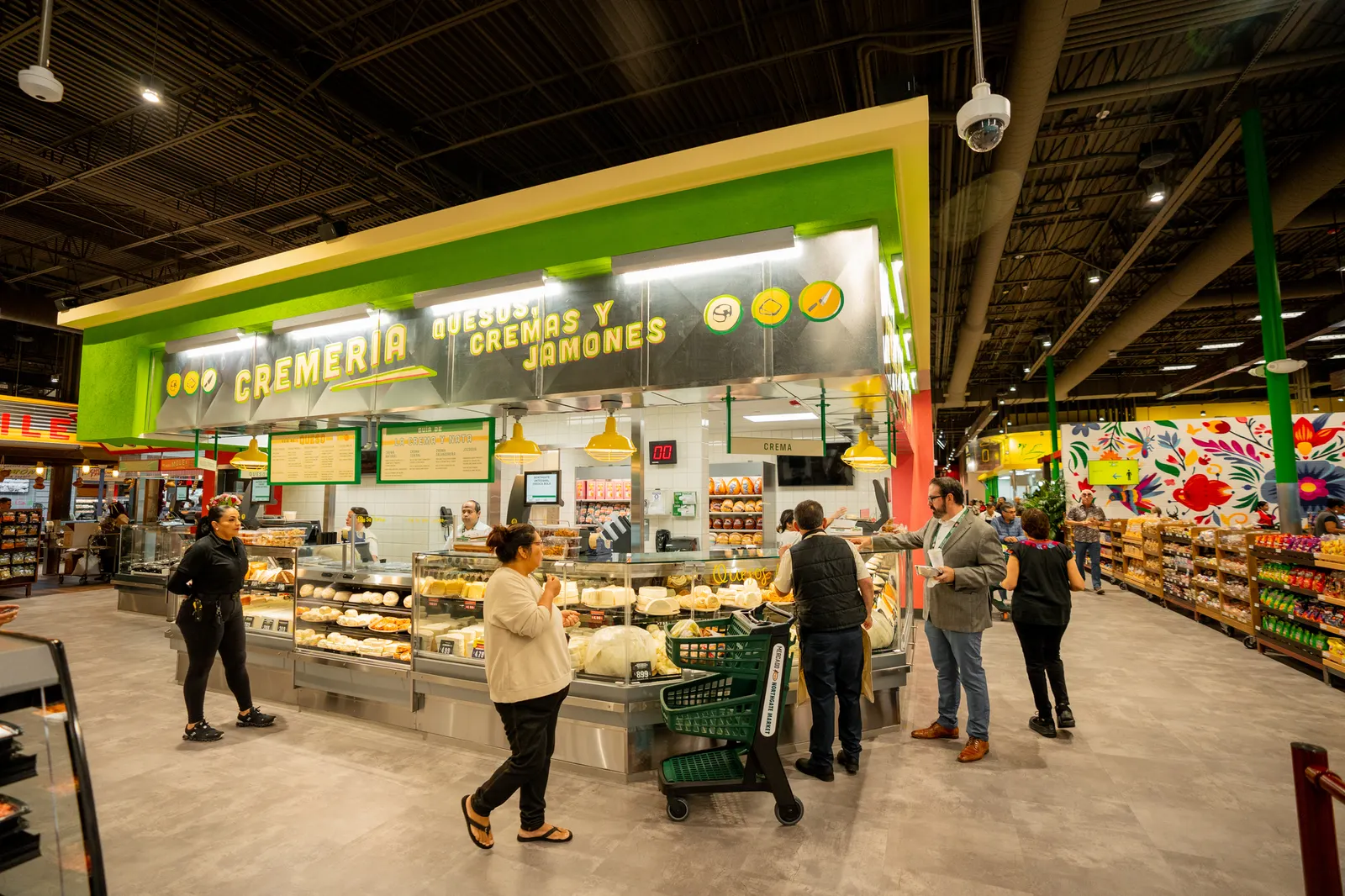
As grocers seek to elevate restaurant-quality experiences, Stern highlightsthe Japanese seafood offerings at Wegmans in Manhattanas well asthe new Mercado concept at Northgate Market, which features food stalls serving authentic Mexican cuisine such as churros. Anne Mezzenga, co-CEO of retail podcast OmniTalk and former Target executive, says she expects grocers to emphasize seamless experiences by investing in "smart store" concepts that connect technology.
For example, Schnuck Markets is using in-store patrol robots and electronic shelf labels, Mezzenga says. These technologies not only help reduce shrink and improve inventory visibility, thereby creating the store's "central brain," but also enhance the shopping experience, Mezzenga says. Collecting more customer data is also crucial, she adds. "If I walk into the store, you need to know me as well as you know me online, so you can provide me with a personalized in-store shopping experience that feels as convenient as ordering ahead and picking up curbside," Mezzenga says.
E-commerce fulfillment will be store-centric
Kroger's decision last year topause the expansion of its automated order fulfillment center fleet(in partnership with UK robotics company Ocado) sent a signal to industry experts that enthusiasm for using standalone facilities to fulfill online orders is cooling. Mezzenga says Kroger's pullback on the Ocado partnership indicates that more grocers may shift focus toward hybrid automation solutions, such as implementing automation technology in regional distribution centers or large-format stores.
In mid-August, Giant Food confirmed it wouldclose three e-commerce facilities in Maryland, Virginia, and Delaware, in order to adopt a "localized fulfillment model" for delivery services that better meets online shoppers' expectations. Clear also predicts that grocers will primarily invest in in-store and front-end technologies to optimize in-store labor. Tools such as electronic shelf labels and inventory scanning robots will reduce the time employees spend on "non-value-added tasks" like changing price tags, allowing them to focus on the customer experience, Clear says.
Retail media will mature
After adding retail media networks to their toolkits in 2023, analysts say grocers are expected to significantly improve their ability to leverage the vast amounts of information these platforms collect in 2024. "You'll see many retailers very willing to sell customer data. But I think they're also underutilizing it," Furphy says, adding that as companies become more proficient with AI and data science technologies, they will be better positioned in 2024 to create personalized retail media experiences. Furphy also believes that as retail media technology becomes more widespread, retailers and advertisers will need to be increasingly cautious about over-saturating consumers with marketing messages.
In addition to improving their ability to analyze data collected through media networks, major retailers like Amazon, Walmart, and Target may also enhance the quality of content shown to shoppers in the coming year, Berke says. "Leading retail media networks will truly become a pillar of Madison Avenue and become highly competitive media businesses," Berke says for 2024. Gary Hawkins, founder and CEO of the Center for Advancing Retail & Technology, says he expects retail media networks to begin providing CPGs with more insights into the correlation between advertising and consumers purchasing specific items. Suppliers will be able to use this information to develop broader advertising campaigns that go beyond relationships with individual retailers, he says.
AI will become a copilot for grocers and consumers
Entering 2024, traditional AI and generative AI will transform grocers' omnichannel platforms and shape customer experiences, Gibbs says. Generative AI has already influenced the push notifications and one-to-one personalized content customers receive online, Gibbs says. Going forward, the technology will be more deeply integrated into grocers' apps and websites. Along with these advancements, platforms will also offer more "conversational commerce," Gibbs says, meaning building more personalized experiences within the website rather than shoppers having to type information into a search bar or chatbot. While the best personalized recommendations still come from traditional AI techniques, Gibbs notes that generative AI will complement these systems well, such as enhancing tools like image generation.
In late May 2023, Instacart announced the launch of a generative AI search tool calledAsk Instacart, which allows customers to use "natural language" rather than keyword-based searches to find products, recipes, food preparation tips, and more.